

As we dive into allyship, we always begin with self-reflection
In this learning experience, we will start with the self to help you unpack the identities you hold, and work through these concepts as they relate to your lived experiences in your personal and professional life. We will also dive deeper into this reflection and help you apply this understanding to how you show up to courageous conversations and allyship in your community trust groups.
Why do we start here?
Stepping into allyship must begin with the personal work and self-reflection that is critical to bringing an anti-oppressive lens to our allyship.

Building this anti-oppressive lens means we are slowing down to reflect on how power is constructed when thinking about how we might practice allyship and meaningfully show up in solidarity with marginalized communities. This means we must recognize our own social locations and intentionally reflect on how we can leverage this power to address systemic inequalities that are operating simultaneously at the individual, group and institutional level, as opposed to producing and reproducing oppression (even unintentionally) .

We will learn through stories and reflection
In this module, we dive into our first set of community dialogues. We asked community leaders to share their stories, to help develop counter-narratives to the dominant stories we often see in the media. You will hear stories about identity, intersectionality, and what it means to show up authentically.
Community is key
Learning in community and with community is so critical to resisting the forces of oppression and creating spaces for us to come together to learn, heal, and care for one another. We will support this in our community trust sessions and encourage you to build your own spaces for these conversations in your everyday life.
Note: If you are taking this training on behalf of your organization, we encourage you to bring discussion questions back to your team to reflect on together. No one person or team can do this work alone. To ensure our impact is not performative, we must also address how our organizations are doing ongoing and intentional work to host compassionate learning and unlearning conversations.


Let’s dive in and meet your virtual learning team!
To help ground your reflections in empathy, we have shared 4 conversations with some amazing community leaders (5-7mins each) followed by a summary of the key insights from each conversation. These narratives will allow you to gain greater perspective and build empathy, particularly for the identities that you do not hold. We’ve also included reflection questions at the end of this page to help you dig deeper into the lessons shared and reflect on your own identities. Remember, this work is a journey and not a destination and even if you’ve spent time in this reflective space be open to uncovering new perspectives and insights.


-
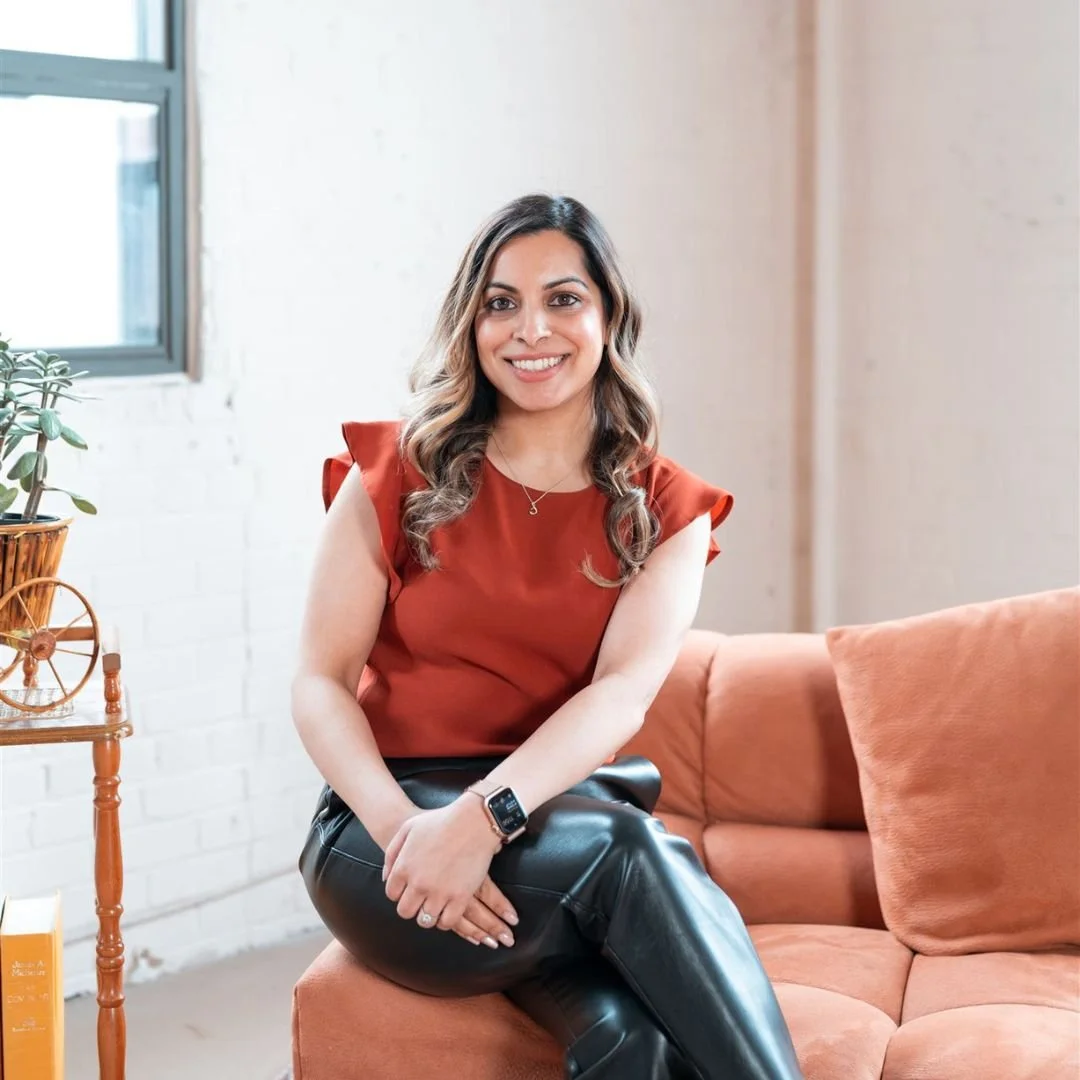
Daniele-Jocelyne developed a passion for Social Impact at an early age. Growing up in places where she often found herself being the only person of colour, she quickly understood the beauty of building bridges between cultures, and the importance of cultivating empathy and cultivating communities of care with a sense of belonging at the heart.
Danièle-Jocelyne now leads New Room's Inclusion, Diversity, Anti-Racism and Social Impact (IDEAS) Strategy, through which she guides the teams, people, and leaders they work with through a human-centred, equitable lens through which to design innovative solutions to the pressing issues we are collectively facing today.
Following her specialized Bachelor's degree in Human Relations and Organization Development from Concordia University, DJ went on to provide organizations of various sizes with her Community Engagement and Strategic Innovation expertise. In 2020, she followed the call for deeper systems change work by going back to school to specialize in Social Innovation Design at the renown University of Pennsylvania.
-
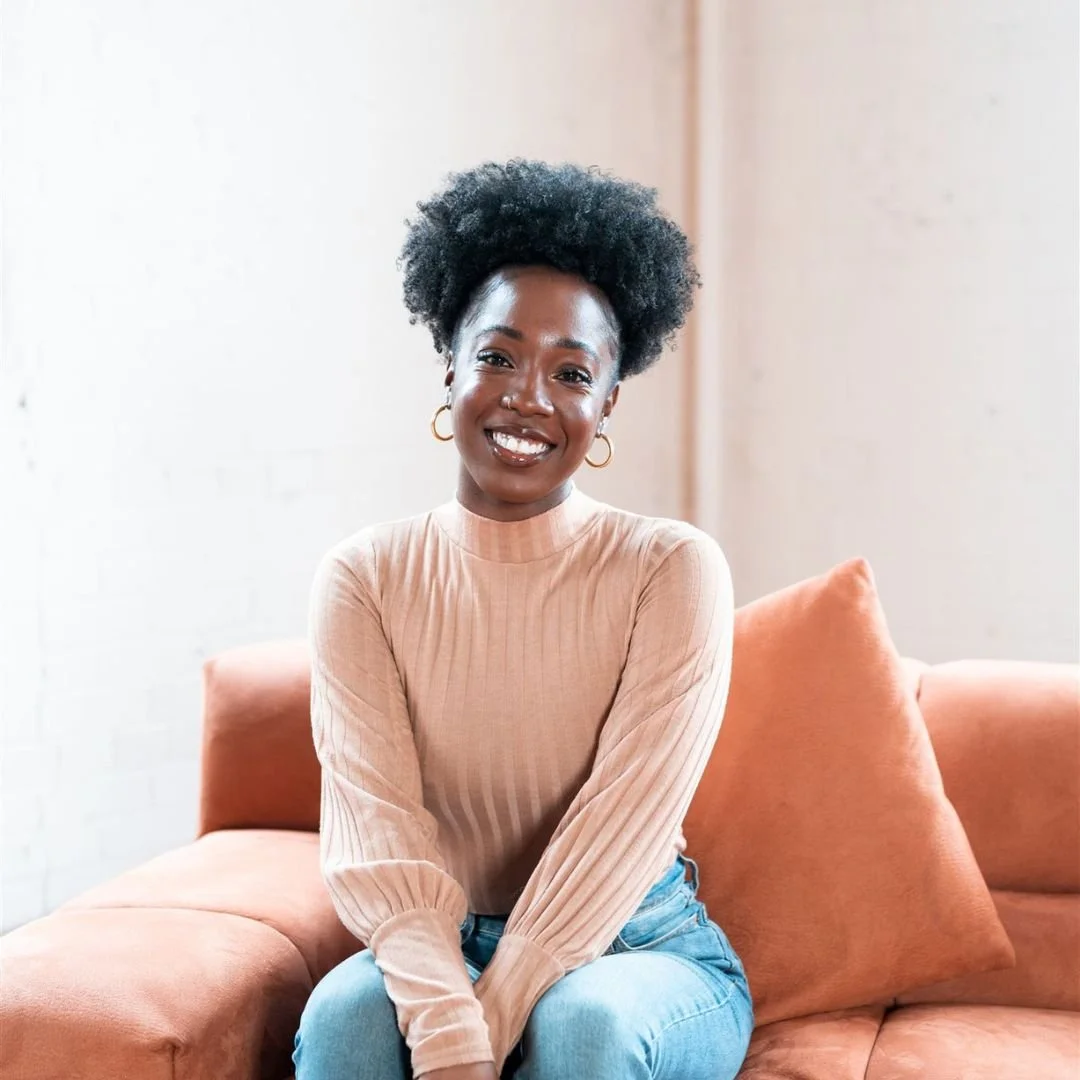
Stephanie is a design researcher and strategist who works with organizations to develop resilient and future-focused strategies, inclusive products, and learning experiences. She currently leads Design & Strategy at Feminuity, a full-service boutique DEI consultancy.
Steph leverages strategic foresight and co-design methodologies as a part of her practice while centering the values of compassion, collaboration, and connection across every workshop, strategy or learning program.
Equipped with a Masters of Design in Strategic Foresight and Innovation at OCAD University, Stephanie brings a strong understanding of systems and cross-sector partnership strategy to her leadership.
You can connect with Stephanie on LinkedIn https://www.linkedin.com/in/srebello/
-
Keosha Love is an award-winning artist, activist and educator who creates spaces for wellness and collection liberation in marginalized communities. As a poet and writer, Keosha is notable for centering healing, womanism and self-actualization in her work. She closely explores the diverse narratives and identities of Black and racialized people to promote liberation and empowerment.
In 2016, Keosha founded Our Women's Voices, a Toronto-based non-for-profit focused on amplifying the voices of women and making social change through arts, education and community organizing.
-
Sheliza Jamal is the Founder and Executive Director of Curated Leadership, an organization that provides training, development and strategy development on justice, equity, diversity, and inclusion principles. She connects her experiences as an educator, theater artist, community builder, and researcher to foster equitable, accessible, and inclusive spaces.
Sheliza is a graduate of the Harvard Graduate School of Education. As an Equity and Inclusion Coach and Ontario certified educator, she brings over a decade of experience using an anti-racist lens in designing curriculum and implementing training and development programs aimed at addressing inequitable outcomes for communities facing oppression. Sheliza is a PhD Candidate at OISE, University of Toronto in the Department of Social Justice Education with a research focus on race bias in teacher education programs.
Sheliza currently serves as a board member of the Harvard Graduate School of Education Alumni Council and is a Founding Member of the Harvard Alumni Entrepreneurs Council Canada. She is also a board member for WorkInCulture.
Connect with Sheliza & Curated Leadership on Instagram: @curatedleadership
Unpacking Identity & Intersectionality
Let’s start with unpacking the identities that we bring into our various roles in our community, and how the intersections of these identities impact our experience


Reflect & Integrate
These are a few key moments to recap the community dialogue that you just watched. Use these key moments to guide you through the reflection questions at the end of this section
-
We don’t have the luxury of separating parts of identities, and these experiences layer with our context to shape how we interact with the world. Stephanie shares that how we express our identities can also change and evolve overtime.
-
Civil rights lawyer and leading scholar of critical race theory, Kimberlee Crenshaw uses the term intersectionality to describe the multiple layers of discrimination faced specifically by Black women at the intersections of gender and race. Keosha shares that being both Black and a woman intersect and work together to shape her experiences. There are also unfair expectations society places on certain identities (i.e stereotypes) that puts undue pressure on Black women to perform, rather than authentically express their full sleeves.
-
Leadership is not about titles, it's about testimonies. Sheliza shared this to unpack how leadership is an active process and not limited to those in formal roles. Allyship is the same idea, and asks us all to step up. Communities rely on informal leaders to model growth mindsets and inclusive practice.
-
We don’t often consider how family roles make an impact on our leadership. DJ shares that as a mother of a Black boy, she is constantly thinking of how to design community spaces for Black children to thrive as part of her advocacy.

Let’s unpack our ‘Canadian’ Identity
As we step into our hyphenated identities, a third-culture is born. Stepping into this identity can look like merging cultural patterns from your own experiences growing up in Canada, your families existing cultural patterns, and your inherited ancestral ways of being.
Reflect on the insights shared in this video and summarized below.
-
DJ shares that to her third-culture is Canadian culture as we are in this multicultural country as settlers while upholding Indigenous voices. We all bring our heritage and ancestry to these lands and become better future ancestors. Steph shares that third culture represents our personal responsibility. It is our responsibility to speak up, step forward, and leverage our power when we are in a spaces that don't work for others. Communities are meant to help us hold this responsibility and help us care for, educate, and connect with one another. By owning our own identities and deepening our awareness we can stand in solidarity with Indigenous communities
-
We are not one identity, Canadian culture is many cultures. Keosha shares that we can show up as we are - Jamaican and Canadian; it doesn’t have to be one or the other. Third-culture can be divisive as we may try to please people but we can show up as we are.
Let’s unpack the “code-switch” reflex
Internalized racism is a barrier to showing up authentically. Code-switching is one symptom of this and is an unsustainable shortcut marginalized folks use to perform in spaces. It requires healing and a culture of support for leaders to shift from code-switching (performance) to authentic self-expression (presence). Authenticity must be coupled with agency to truly allow marginalized identities to feel like they have the choice to show up in their full expression. Without this focus on choice and agency, marginalized folks often “code-switch” to appease the dominant culture.
Review and reflect on these insights from this conversation:
-
Keosha shares that when Black women show up authentically, there can be consequences such as microaggressions, stereotyping, rejection, and hypersexualization. These reactions can lead to internalized racism and creates a societal culture where Black girls are afraid to be loud, unapologetic and to express themselves in a way that feels right to them.
-
While being adaptable is a skill, it can also be a trauma response. Marginalized folks have been taught to shape-shift or change our behaviour to adjust and accommodate other people. This ultimately asks marginalized folks to not only excel at their work but constantly “read the room” and uphold the norms, practices, and mindsets of the dominant culture. This results in inauthenticity and can lead to imposter syndrome and, eventually burnout.
Let’s create safer and braver spaces together
There is a benefit to both safe and brave spaces; they go in tandem. Safe spaces are important for bridge building by bringing in and holding community. Brave spaces ask us to tap in deeper, and ask folks to model vulnerability and be in authentic expression with a trusted community.
We need both spaces to sustain our advocacy efforts, rest, and do our own healing as leaders. Keosha shares that brave spaces are about challenging others' expectations of how they want us to show up and rejecting societal expectations and assumptions of how to lead and make change.
Safer and braver spaces are an active commitment. We can’t assume they are always safe; we have to actively create these conditions, check-in, and make adjustments. Stephanie suggests using the language saf-er and brav-er to speak to this ongoing work.
Reflection questions
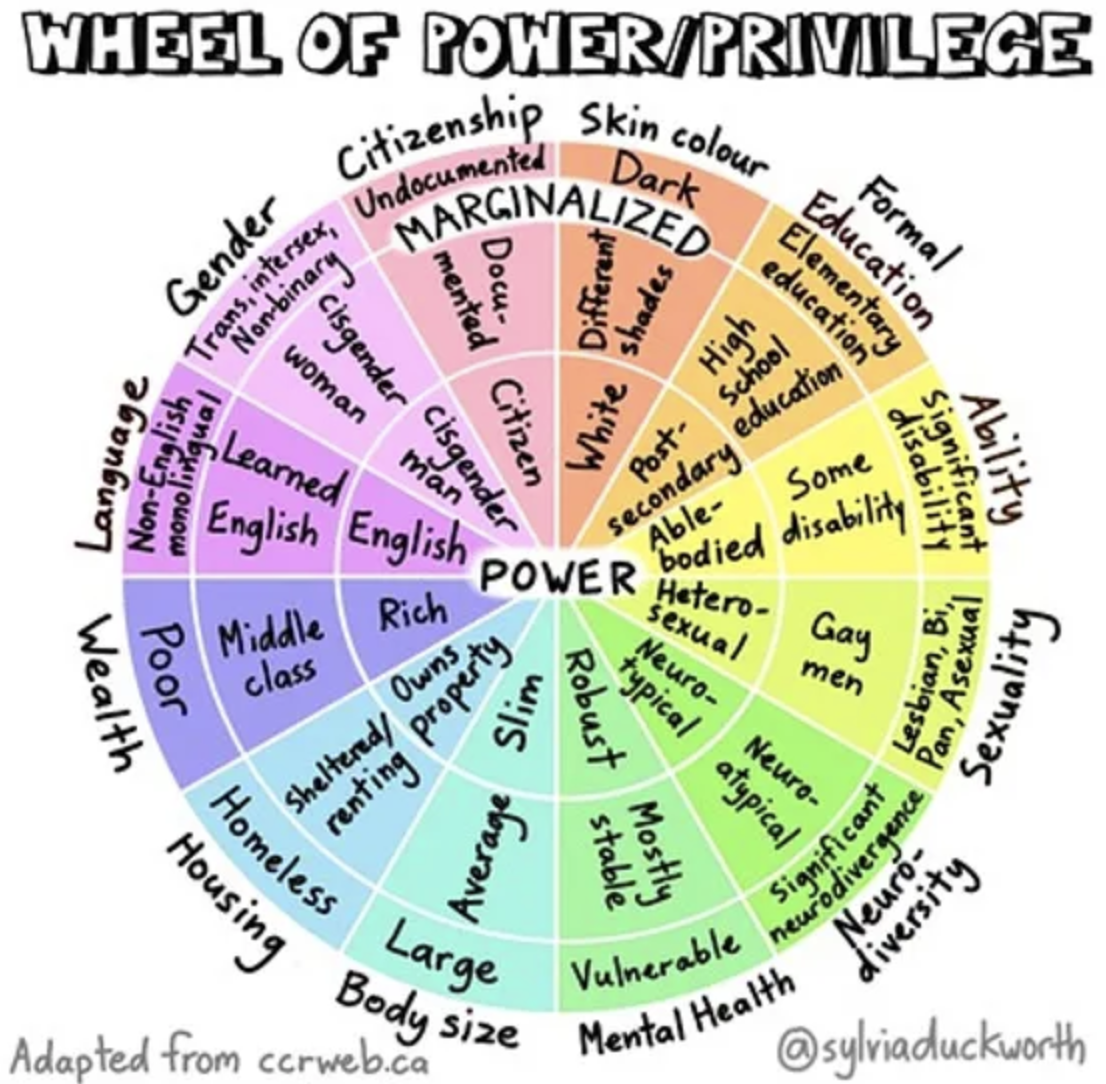
Look back at your identity map; which of your identities most informs how you show up in this learning space? In your personal relationships? In your work?
Which identities do you think about the most? Least? Which identities do you want to learn more about?
Which identities are you most comfortable sharing at work? Which identity is often the most noticed? Which identities do you minimize, if any? Why?
Have you ever had to code switch? What part of your identity were you trying to dismiss? How did that make you feel?
What are some of the norms that exist within your friend groups, workplaces, family settings, or community spaces that might contribute to this need to code switch/perform? By naming these cultures and talking about them we can be mindful how they might influence our decision making and check these potential biases.
What conditions do you need to show up authentically in spaces? As a leader (formal or informal), how can you empower more agency and choice amongst others around you? Think about experiences where you felt you were at your best on a team (either in work, sports, or community). What behaviours, actions, cultures were present that made you feel this way? What does vulnerability at your organization look like? Feel like? Sound like?
What conditions do you require to engage in safer or braver spaces?